U.S. Housing Market: Home Price Growth by State (2021–2026)
Source: visualcapitalist.com
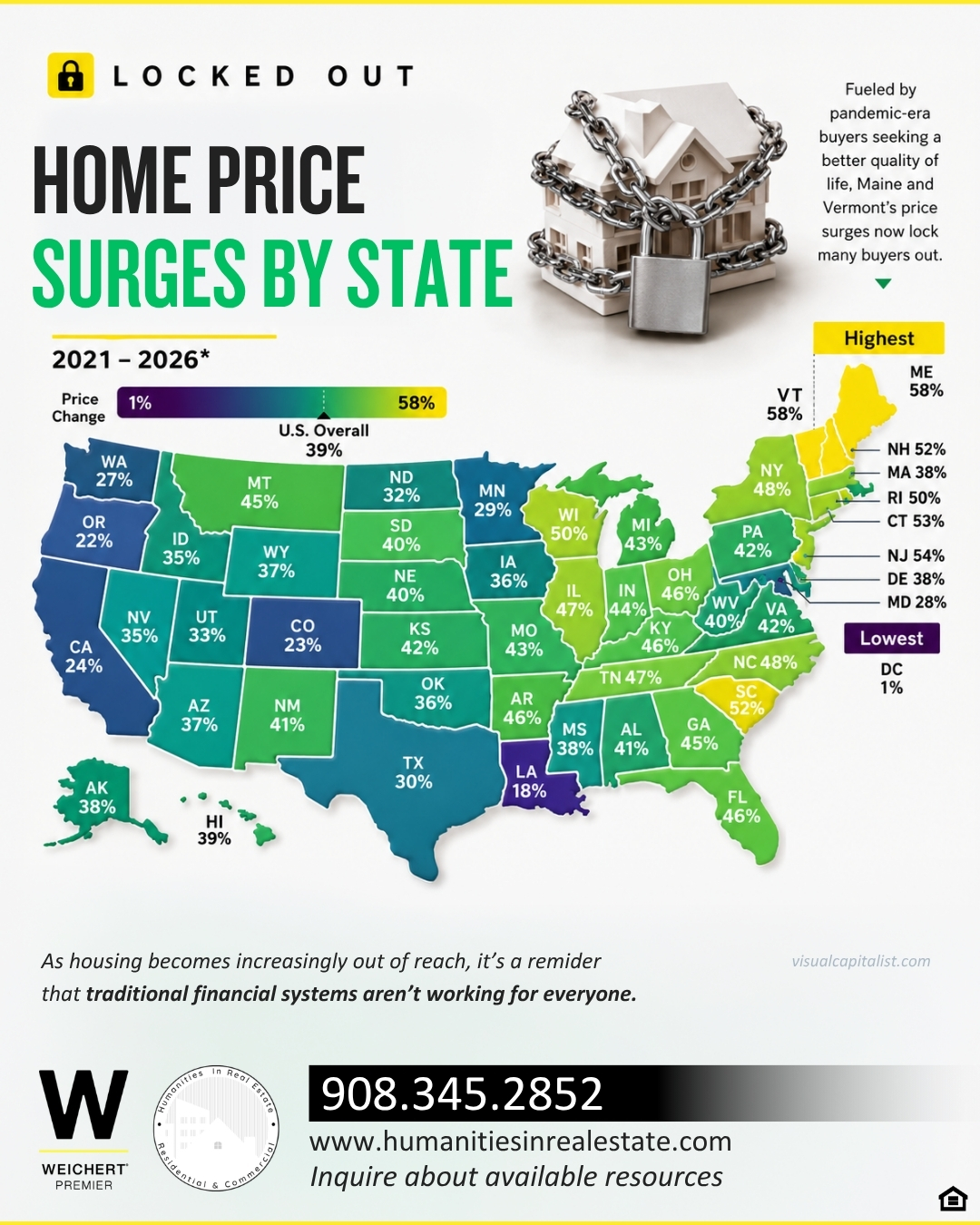
Housing prices have risen sharply across much of America over the last five years. In Maine and Vermont, prices are up nearly 60% since 2021, highlighting how affordability challenges continue to shape the U.S. housing market.
This chart, created in partnership with Plasma, shows how housing prices have changed across the country for the five-year period ending March 2026. It’s part of our Cost of Living series showing the money challenges people face today.
Housing Market Price Increases by State
Maine had the highest housing price growth in the country. Notably, prices rose more than 58% between the first quarter of 2021 and the first quarter of 2026. By comparison, the average income increased by just 16% from 2021 to the end of 2025, highlighting the growing gap between housing costs and earnings.
The state’s housing market faced a perfect storm of limited supply, an influx of remote workers, and strong demand driven by Maine’s natural beauty and quality of life.
Vermont had the second-highest housing price growth of just under 58%. Similar to Maine, the state saw an influx of remote workers seeking more space and a higher quality of life.
Vermont’s housing market faces additional challenges with high construction costs and strict zoning that limits multifamily developments. With a slow pace of home building, there simply aren’t enough homes: it’s estimated that Vermont needs 24,000–36,000 more year round homes by 2029 to meet demand.
While four of the five states with the biggest price jumps are in the Northeast, South Carolina bucks this trend. The state had the fastest per-capita population growth in the country in 2025, with strong job growth continuing to attract new residents and boost housing demand.
The Impact of Housing Price Increases
With prices rising rapidly, many buyers are getting locked out of the housing market. The national house price-to-income ratio, which is one measure of affordability, has climbed from 3.5 in 1985 to 5.1 in 2025. In other words, housing prices are growing much faster than incomes.
The effects also spill over into the renters’ market. For instance, Vermont’s rental vacancy rate is as low as 1% in some places, and one-in four renters pay more than 50% of their income on housing costs.
As housing costs consume a larger share of household budgets, finding ways to get more from your money matters more than ever. The Plasma One app helps users earn more on their money with up to 4% cashback and up to 6% earnings on balances.
#HumanitiesInRealEstate